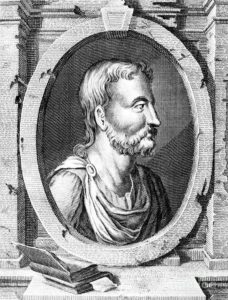
Aulus Cornelius Celsus (c. 25 BC – c. 50 AD) was a Roman encyclopedist best known for his medical work De Medicina, the only surviving part of a larger encyclopaedia covering various subjects. Although it is uncertain whether he practiced medicine himself, De Medicina is a crucial source on Roman medical knowledge, covering diet, pharmacy, surgery, and dermatology. His work reflects and advances Hippocratic and Alexandrian medical traditions, providing detailed descriptions of diseases, treatments, and surgical techniques.
Celsus revolutionised medicine by systematically describing the four cardinal signs of inflammation—redness, swelling, heat, and pain—and emphasising cleanliness and wound care with antiseptic substances like vinegar and thyme oil. He also contributed to early surgery, describing plastic surgery techniques, ligature use to stop bleeding, and treatments for head injuries including craniotomy. His writings laid foundational knowledge for centuries, influencing both medical practice and terminology, and bridging Greek medical theory with Roman practical application.